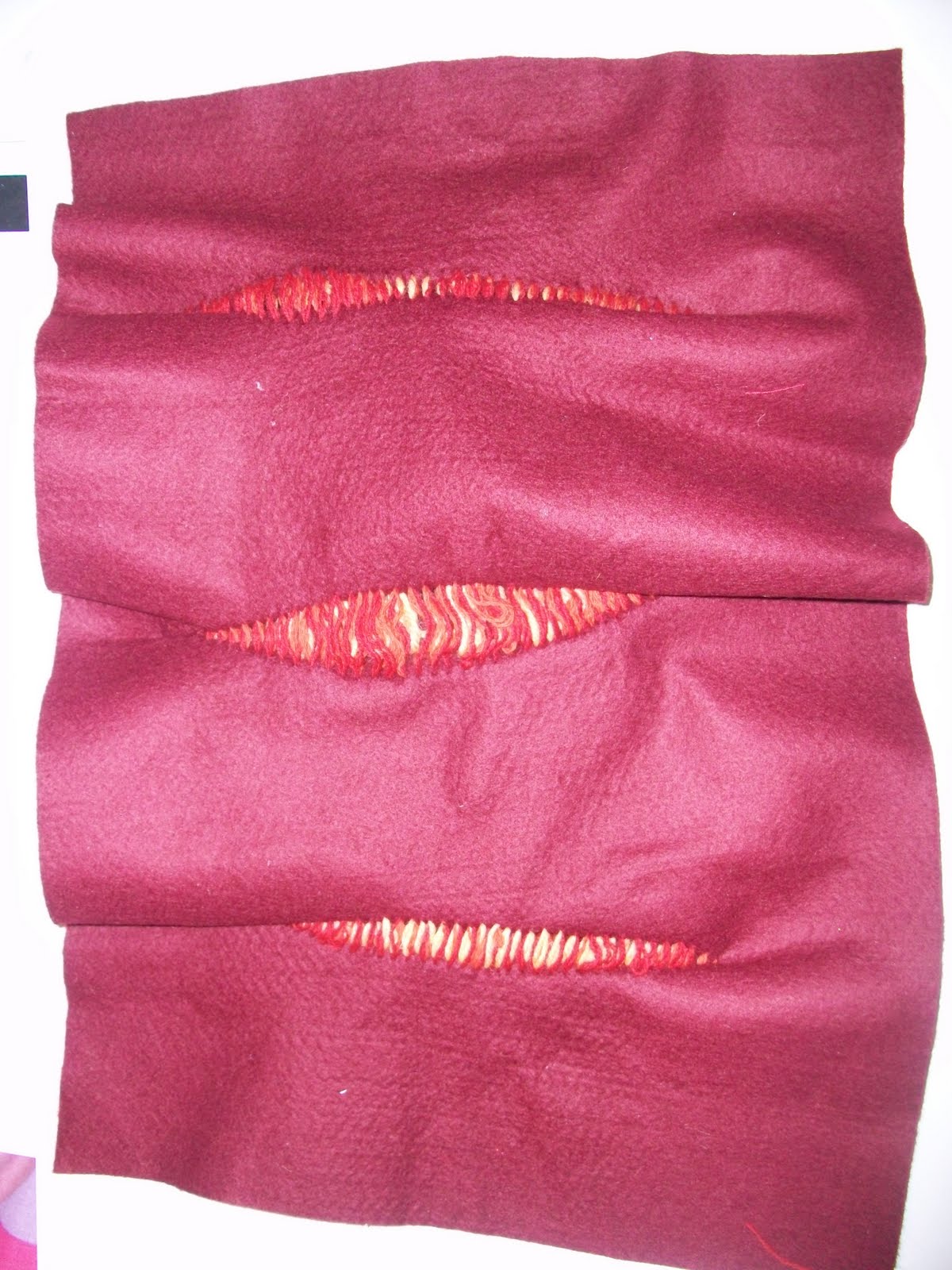
Been at it again all day, doing the prints on photoshop, but its been worth it I think as I've got some nice designs out of it and can't wait to see them as finished scarves on silk! I'll be like a real designer!

 One thing I find it really hard to do when design pattern, especially in print is visualise them in use in actual clothing or interior fabric. I always just think its too bright or bold or graphic to be used as anything other than a sample but I think these pieces help because the prints are so different but combined with the angular shape of the dresses, the reptile colours, scale texture and graphic shapes really work well together

After seeing both the Trash fashion and Art, Fashion, Identity exhibits I am going to base my research around the work of the designer Suzanne Lee, who merges the fields of science and technology and fashion to combat the ever growing problems we have in todays society with over consumption and use of unsustainable resources. I will begin my research by looking at why there is a need for a more sustainable supply of clothing and materials and just how damaging our wasteful consumer society is to the environment. Then through analysis of Lee’s bio couture clothing, I will investigate the new and exciting ways designers are finding ways of creating fabric using as few natural resources as possible and without creating a devastating and irreversible effect on the planet. I think it will be interesting to find out how designers are now seeing the need for renewable textiles and see to what extent they are using new materials to create more environmentally friendly collections. I think it will also be interesting to look at how it is almost viewed as a social stigma and embarrassment to break the rules about buying new clothes for different and special occasions and being more environmentally friendly. Recycling textiles and reusing old fabrics, customizing, or up cycling old garments is a brilliant idea for the environment but it is interesting to question how socially acceptable the ideas are and how the stereotype images of recycles clothes actually differ from the real thing. The role of traditional craft also plays a part, as handmade, ethically produced garments using local materials has very little impact on the environment compared to massive factories, but once again there are social prejudges towards clothes which may be considered “crafty” and it will be interesting to see how sustainable craft can be more than brightly coloured felt and more high end fashion.
Although I have already written about going to this exhibit before Christmas, I went again last Friday and after a lecture on consumerism I saw the exhibit in a totally different light. Before I had been more interested with what each piece was and how it looked, the usual things we see in fashion and art, however this time I saw a link between each garment and the artist’s attitudes to over production and consumption in the fashion industry.
There were some pieces which were made to show how we use clothes to give ourselves an identity and we feel the need to consume more and more to secure this image of ourselves. There was a video by Cindy Sherman (Clothes, 1975) which showed her dressing up as a paper doll, however when a hand came and look the clothes away she was left naked and her true self exposed, without the clothes to give her a position and identity. And a similar video by Yoko Ono (Cut piece) in which people were invited to cut sections of her clothes off and once again leave her true naked identity exposed. Gillian Wearing used film to show a group of police men and women positioned for a photo. At the start the officers all looked the same, straight faced and authoritative however over time they began to move slightly and fidget, showing a glimmer of personality and almost loosing the power the uniform gave them.
There were also pieces with messages about our over consumption of fashion, such as a set of photos by La Maison Martin Margiela (9/4/1615, 1997) which showed garments which were once pristine white, treated with bacteria to erode the fabric to represent the relentless cycle of the “fashion calendar”.

A set of felt garments by Andrea Zittel (A-Z fibre uniforms, 2003-6) also showed how we are now obsessed with constantly having new clothes for every event and season. She had made a set of “uniforms” to be worn for different tasks, on different occasions and in different seasons, however unlike todays cheap garment production using unsustainable resources, she had used the traditional technique of felting to give the garments a timeless feel. I think this is her way of criticizing the fashion industry and even though the outfits are only meant to be worn for a short section of time they are traditionally made with little environmental impact, unlike many of the mass-produced clothes we buy today.
Dai Kees’ “Triptych in a butchers window” depicted 3 animal carcasses made from vogue pattern pieces in leather and showed great levels of skill and craftsmanship, again unlike the clothing we buy today. Using the vogue patterns and the magazine cover inside each carcass also showed how influenced we are today by branding and how mass marketing really effects what we wear and who we try and portray ourselves to be.

One photo I found quite powerful was by Andreas Gursky (Kuwait Stock Exchange), which depicted hundreds of Muslim bankers, all dressed exactly the same in traditional white Arab dress. I found it interesting because of the difference in cultures and the clothing worn where I live and in the photo. I had no idea what the clothing was meant to represent and if the rigid dress code was about power, wealth, religion or culture and it made me question whether western society uses clothing to represent these things and what happens without clothing, do we loose our status and identity, or betray our religion? The photo was very visually interesting because of how alike all the men looked and how although they are all individuals, together they looked almost like an army, all in uniform and indistinguishable. I felt this scenario could be applied to many groups in western society today, the “chavs” and “moshers” who all try to dress in the same way and although distinguish themselves from other sections of society, also loose their own personal identity as they try to follow a set pattern of dress to fit in.